
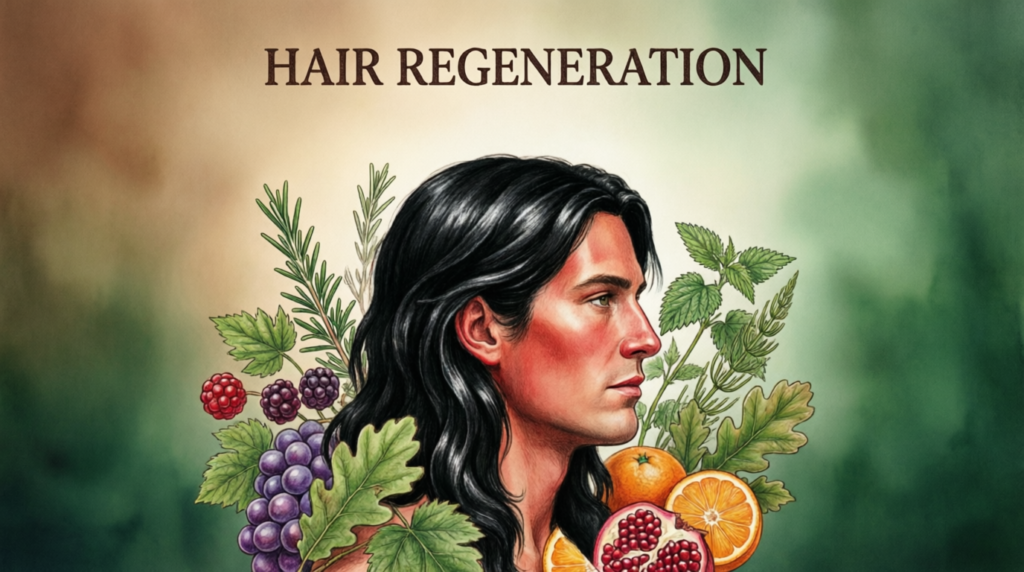
Hi, I was able to reverse my hair loss by going on an extreme raw fruits and vegetable diet. You can see my results here. This took me 14 months to get the full volume but I began seeing results after 5 months. I have created this website to document myself and help others.
PART ONE
Your Hair Is a Living Record of Your Inner Health
Every strand of hair that grows from your follicles is a chronicle of what is happening at the cellular level. According to Dr. Robert Morse’s foundational work in cellular regeneration, the first inch or so of hair growth reflects the last two months of the body’s metabolic activity. As hair grows outward, it quite literally “locks in” the history of intra- and extracellular function — mineral status, toxic metal accumulation, hormonal output, and the state of the body’s acid-alkaline balance. This is why the FBI and the EPA both rely on hair analysis for forensic investigation: hair is so accurate a record that toxicologists can determine not just what substances entered the body, but approximately when.
The same principle applies to health. Hair tissue analysis is, in many respects, more reliable than blood tests because it reflects what is actually happening at the cellular and tissue level — not just what is circulating in the bloodstream at a single moment in time.
When we understand hair this way, hair loss stops being a mystery and becomes a readable language. Thinning hair, brittle strands, premature greying, slow growth — each has a systemic root cause, and each points to specific imbalances worth addressing.
PART TWO
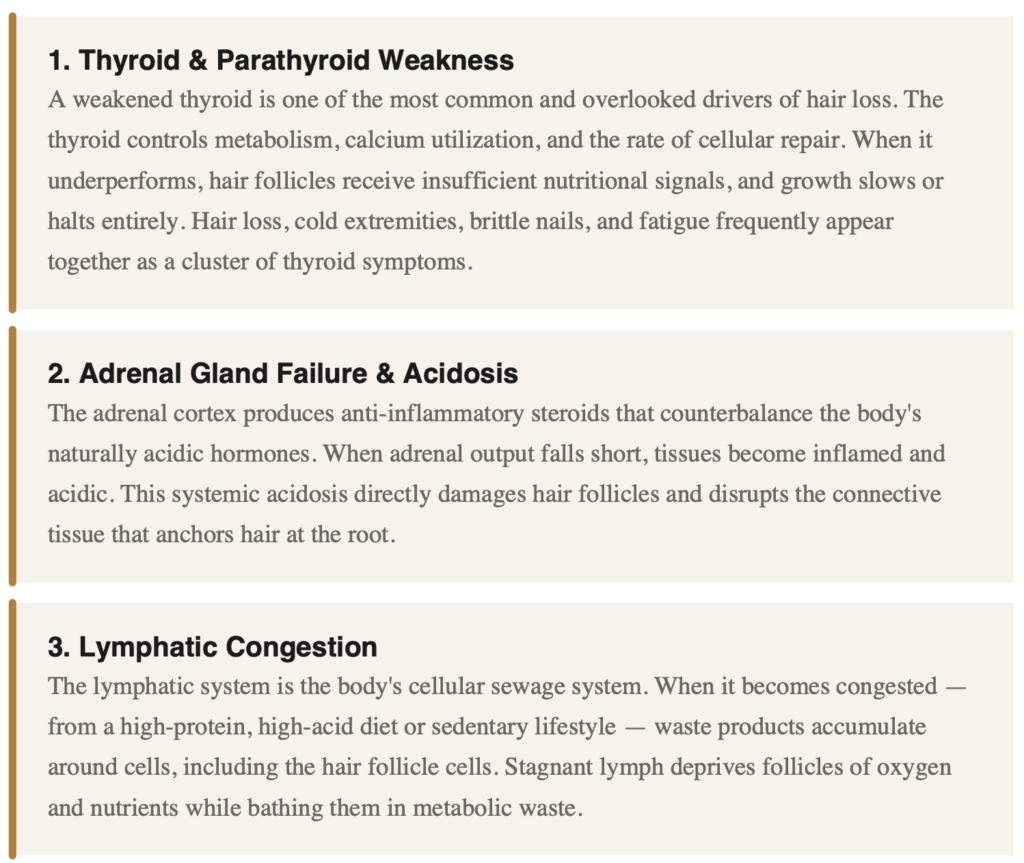
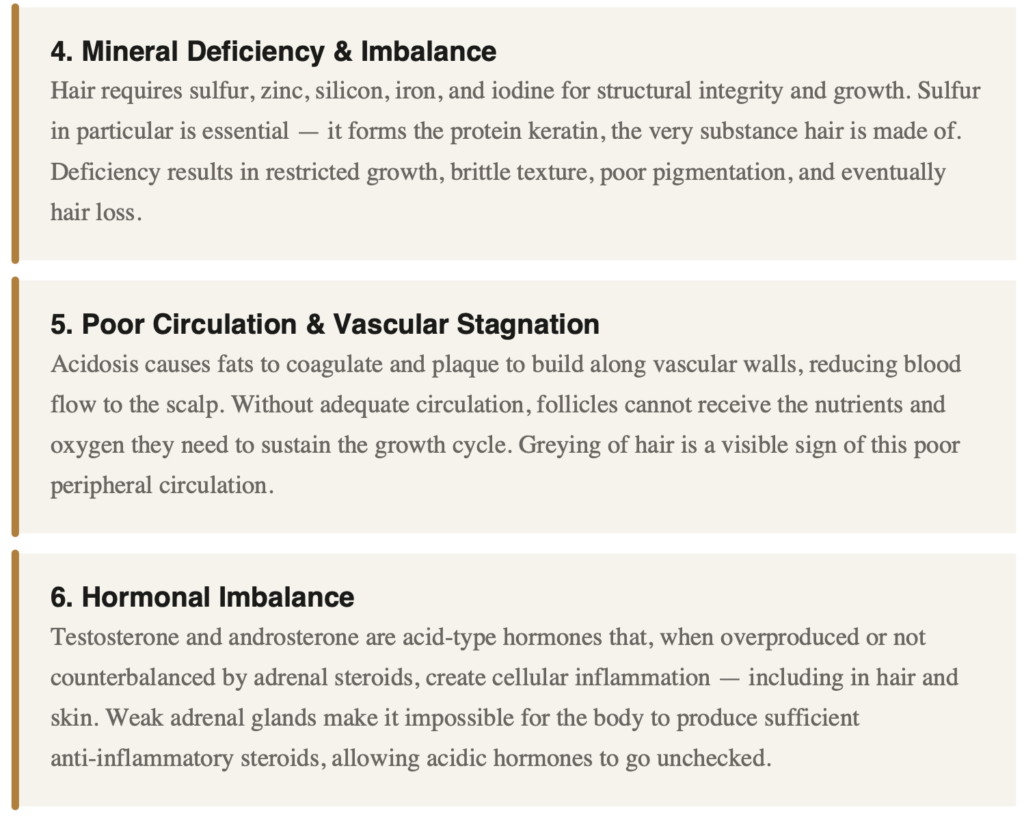
The Six Root Causes of Hair Loss
Hair loss is rarely one thing. It is nearly always the end result of several interacting failures within the body’s glandular, lymphatic, and digestive systems. Based on Dr. Morse’s extensive clinical work, the following are the primary drivers:
“Acidosis and inflammation are virtually the same thing. When the body becomes acidic, cells cannot receive nutrition, remove waste, or regenerate — and hair follicles are among the first to show it.”
PART THREE
The pH Imperative: Why Acid Kills Hair
Of all the factors driving hair loss, none is more fundamental — or more ignored than the body’s acid-alkaline balance. pH is not just a number on a chemistry chart. It is the environment in which every single cell in your body lives, breathes, and either thrives or deteriorates.

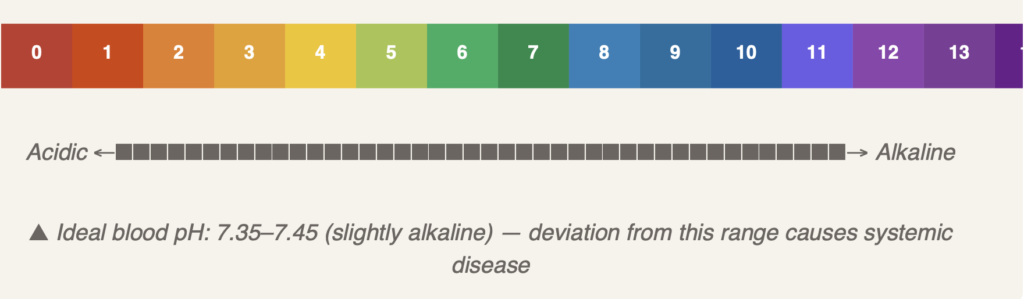
The human body is, at its core, an alkaline organism. Lymph fluid, blood, intestinal secretions, and pancreatic enzymes are all alkaline in nature. When a predominantly acid-forming diet takes hold — one heavy in animal proteins, refined sugars, processed starches, caffeine, and alcohol — the consequences cascade throughout every system. Hormones fall out of balance. Food ferments and putrefies. The lymphatic system, overwhelmed, begins to congest.
What Acidosis Actually Does to Hair Follicles
When tissues become acidic, they become inflamed. Inflamed scalp tissue restricts blood flow to the follicle, impairs the delivery of essential minerals and oxygen, weakens connective tissue that holds hair in place, and accelerates the atrophy of follicle cells themselves. Premature greying follows the same pathway: pigment-producing melanocytes are equally sensitive to reduced circulation and a toxic cellular environment.
The Scalp’s Own pH — Often Overlooked
The scalp’s surface has its own acid mantle — a thin protective film that normally sits around pH 4.5 to 5.5. When harsh shampoos, chemical treatments, hair dyes, bleaches, or alkaline-stripping products are used chronically, this protective mantle is disrupted. Follicles become vulnerable to inflammation, microbial growth, and blockage — compounding the internal damage already being done by systemic acidosis.
PART FOUR
The Nutrients Hair Depends On — And Why They Disappear
The follicle is among the fastest-dividing cell structures in the body, and it draws heavily on the body’s mineral and nutrient reserves. When those reserves are depleted by poor diet, toxic burden, or systemic acidosis, hair is one of the first things to suffer.
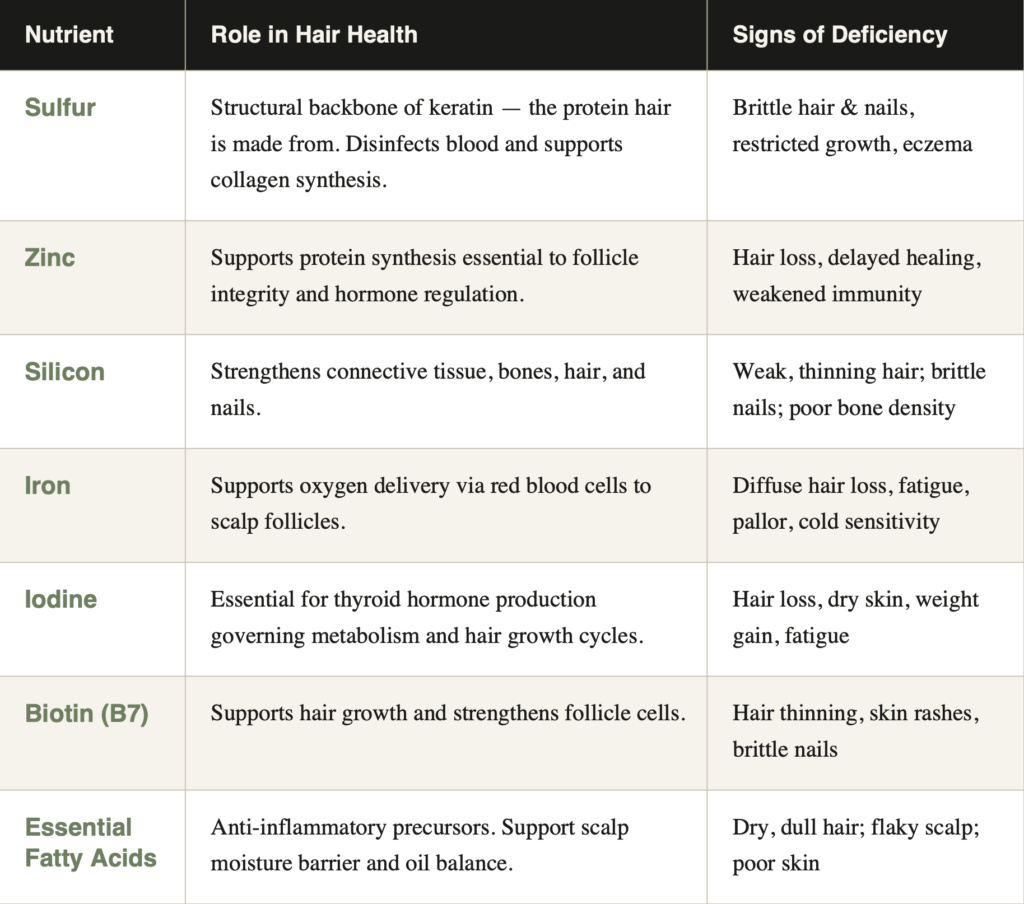
What is important to recognize is that nutrient deficiencies are rarely about inadequate intake alone. More often, they reflect the body’s impaired ability to absorb and utilize minerals — because the digestive system is weakened or the lymphatic system is too congested to transport nutrients to cells.
PART FIVE
Restoring Hair From the Inside Out
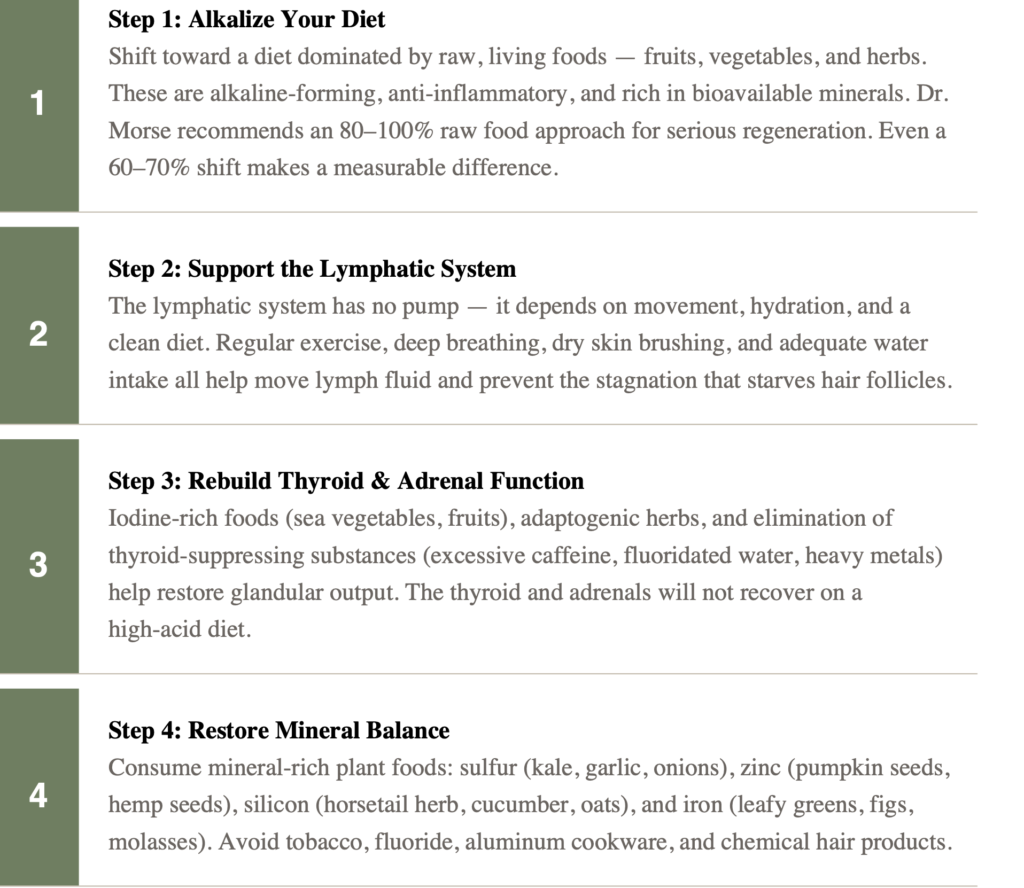
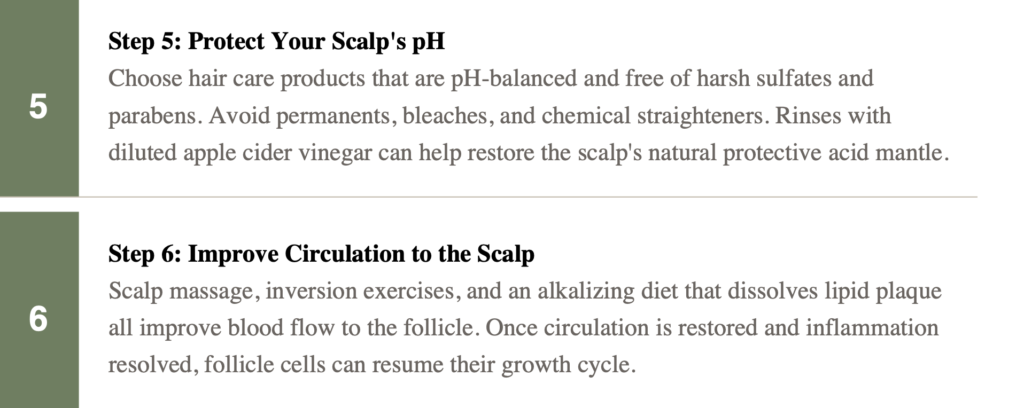
A highly notable finding emerged from Dr. Morse’s clinical observations: when the body is properly detoxified, alkalized, and nutritionally supported, many of these processes reverse. Patients who committed to cellular cleansing reported not only a halt to hair loss but, in some cases, the return of natural hair color. Grey hair was observed to return to its original pigmentation as circulation was restored to follicle cells.
Closing Points
We have been conditioned to treat hair loss as an inevitability — something genetics hands us and medicine can only partially slow. But the deeper understanding offered by cellular health research suggests something more hopeful: the body is constantly trying to communicate, and hair loss is one of its clearest dispatches.
The follicle cell, like every cell in the body, needs an alkaline, hydrated, mineral-rich, well-circulated environment to function. When that environment is compromised by chronic acidosis, lymphatic stagnation, glandular weakness, or mineral depletion, the follicle responds accordingly — first with changes in texture and color, then with slowed growth, then with loss.
The good news is that cells are regenerative by nature. The body does not want to lose hair. It wants to maintain it. When we address the actual root causes — not just the surface symptoms — the body’s own regenerative intelligence takes over. pH balance is not a wellness trend. It is the fundamental chemistry of life. Maintain it, and you maintain the environment in which healing — including hair restoration — becomes possible.